

Michael Roth's blind spot
Why do liberals have such a hard time interrogating liberalism?

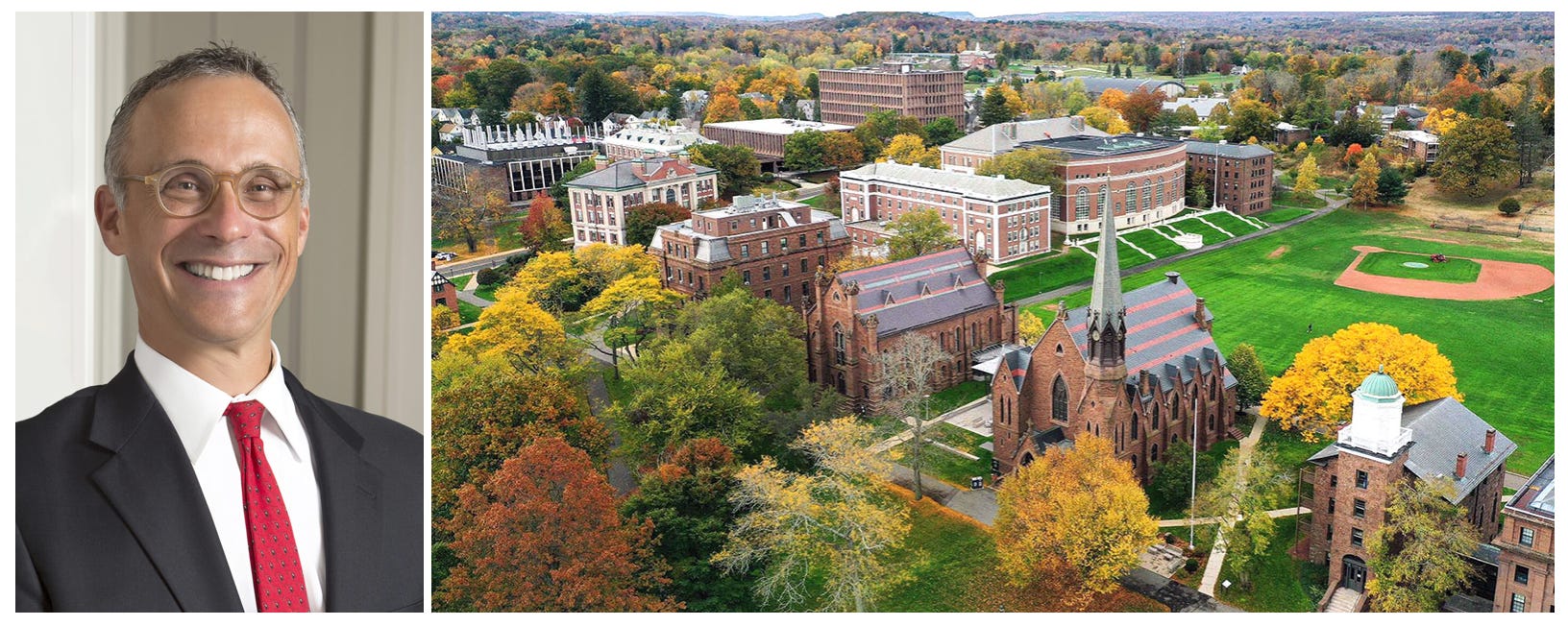
Michael Roth is no dummy.
When he was a Wesleyan undergraduate in the late 1970s, Roth designed a university major in the history of psychological theory and wrote a thesis titled Freud and Revolution, which would eventually become the basis for his first book and a Library of Congress exhibition. He completed his undergraduate studies in three years, graduating with University Honors, summa cum laude and Phi Beta Kappa, and went on to earn his doctorate in history at Princeton University in 1984. He has served as the president of the California College of the Arts, the associate director of the Getty Research Institute in Los Angeles, and the Director of European Studies at Claremont Graduate University. In 2007, he became the 16th president of Wesleyan.
So why does such a smart guy who is president of a well-respected university regularly say things like this?
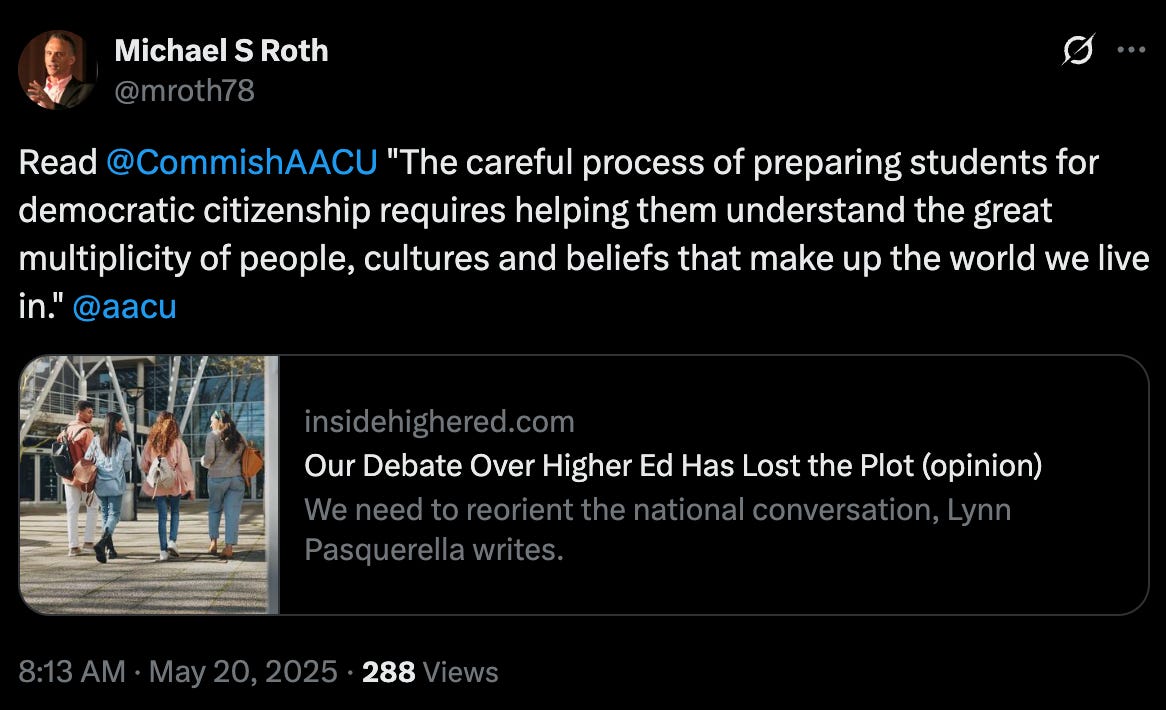
President Roth’s enthusiasm for “preparing students for democratic citizenship” is a theme he returns to repeatedly. Here are just a few examples:
“Wesleyan is committed to empowering its students, faculty, and staff to develop the skills of citizenship so that they are equipped to defend democracy.” — from Wesleyan University’s Democracy 2024 initiative.
“We in higher education… must affirm the core principles of civic education and take specific actions to defend democracy while it is still possible to do so. …Whatever party or candidates one supports, colleges and universities must defend democracy to defend their very mission, to defend their values of free inquiry and teaching.” — from “Higher education must help protect democracy,” Salon, December 12, 2023.
When he recently accepted the PEN/Benenson Courage Award for standing up to government assaults on higher education, President Roth said:
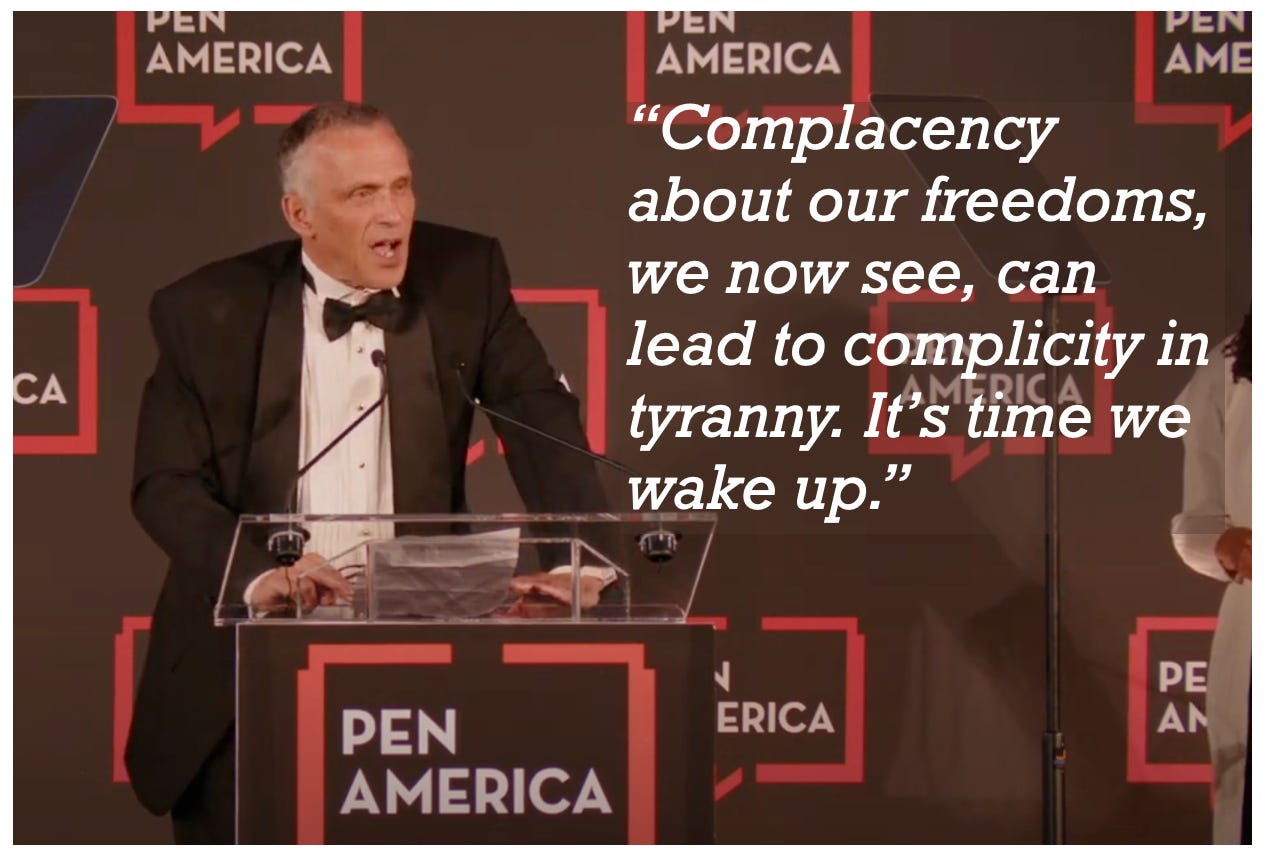
Roth is, without a doubt, a devoted liberal (small d) democrat.
Yet here’s what I don’t understand: The university that Roth has been leading for the past 20 years makes no requirement — none — that students who graduate from Wesleyan know anything about democracy, liberalism, John Locke and J.S. Mill and John Dewey, the Federalist Papers, the U.S. Constitution, or the Bill of Rights.
Wesleyan has no distribution requirements. You can earn your B.A. without ever learning anything about democracy.
How, then, does Roth expect students to defend democracy when his university makes no explicit demands that they learn about democracy?
“Okay, maybe that’s true… but ask me about stoichiometry!”
Consider a student who majors in, say, chemistry. He can earn his Wesleyan degree, and fulfill what’s called the General Education Expectations, by taking the following courses over four years. (Important to note that these “expectations” are just strong suggestions that students vary their academic diet — a chemistry major might take a studio art class, for example — but they’re not requirements.)
Year 1
Semester 1 (Fall)
CHEM 141: General Chemistry I
MATH 121: Calculus I
FREN 101: Elementary French I (courses that fulfill the General Education Expectation, in bold)
PSYC 105: Introduction to Psychological Science
CHEM 521: Chemistry Colloquium I
Semester 2 (Spring)
CHEM 142: General Chemistry II
CHEM 152: Introductory Chemistry Lab
MATH 122: Calculus II
FREN 102: Elementary French II
ECON 101: Principles of Economics
CHEM 522: Chemistry Colloquium II
Year 2
Semester 3 (Fall)
CHEM 251: Organic Chemistry I
CHEM 257: Intermediate Chemistry Lab
PHYS 113: General Physics I
PHYS 123: General Physics Lab
COMP 112: Introduction to Programming
Semester 4 (Spring)
CHEM 252: Organic Chemistry II
CHEM 258: Organic Chemistry Lab
PHYS 116: General Physics II
PHYS 126: General Physics Lab II
MUSC 101: Fundamentals of Music
Year 3
Semester 5 (Fall)
CHEM 337: Physical Chemistry I
MATH 221: Vectors and Matrices
CHEM 361: Advanced Inorganic Chemistry
ARST 131: Introduction to Drawing
Semester 6 (Spring)
CHEM 338: Physical Chemistry II
MATH 222: Multivariable Calculus
CHEM 321: Chemical Thermodynamics and Kinetics
PHIL 201: Introduction to Logic
Year 4
Semester 7 (Fall)
CHEM 375: Integrated Lab I
CHEM 342: Advanced Organic Chemistry
SOC 101: Introduction to Sociology
Elective (Open)
Semester 8 (Spring)
CHEM 376: Integrated Lab II
CHEM 383: Biochemistry
Elective (Open)
Elective (Open)
Four years of classes… and not a word about Jean-Jacques Rousseau’s concept of “general will” or John Locke’s Letter Concerning Toleration. (If the only facts Wesleyan graduates know about democracy are those they learned in class, then they should be forgiven if they think the Electoral College is a Division III basketball rival.)
But Alan, you don’t understand, I hear you saying. A liberal arts education isn’t supposed to teach you what to think; it’s supposed to teach you how to think.
This is nonsense, of course. If you’re a chemistry major, your class in thermodynamics is about thermodynamics, and if you don’t master the material — the what of the course — then you’ll fail.
“Rebound! Fight through the picks! And we’re pressing, full-court!”
Imagine a fitness instructor who teaches you how to lift weights, do aerobic exercises, and eat nutritious food — and who then sends you into a basketball game to play point guard. The crowd is cheering, your teammates are waiting for you to set up the next play… but you have no idea what’s going on.
Michael Roth is that fitness instructor. Yes, he’s helped you develop your leg strength and aerobic capacity, which are useful in all sports, but he never bothered to teach you how to dribble or play zone defense.
If you want people to play basketball, then teach them about basketball.
If you want young people to participate in a democracy — to protect our freedom and not be “complicit in tyranny” — then teach them what those words mean. But Wesleyan doesn’t require that. Most schools don’t. The question is: Why?
Here’s my guess: Universities specifically, and schools more generally, no longer have the cultural confidence, the social capital, the economic leverage, or the courage to stand up and say to students (aka the “customers”): Before you leave this campus with a diploma, you will need to demonstrate a basic understanding of liberal democracy — what it is and how it works. You will need to fulfill specific distribution requirements — survey courses (at minimum) that cover the U.S. Constitution, the Bill of Rights, and the essential plot points of the American Story.
My friend Sean (who was my roommate during our senior year at Wesleyan) recently asked me: Should we make courses in American History and American Government… mandatory for a degree?
Yes, we should. A liberal arts college should require its graduates to know something about liberalism and the world it created.
Because when a college no longer has distribution requirements — when you say, as an institution, that one set of facts or one particular academic discipline is no more or less important than another — then you’re not strengthening liberal democracy, you’re abandoning it.
If President Roth truly believes what he says — “Wesleyan is committed to empowering its students, faculty, and staff to develop the skills of citizenship so that they are equipped to defend democracy” — then democracy education isn’t an elective, a suggestion, or a strong recommendation. It’s a requirement.
Postscript
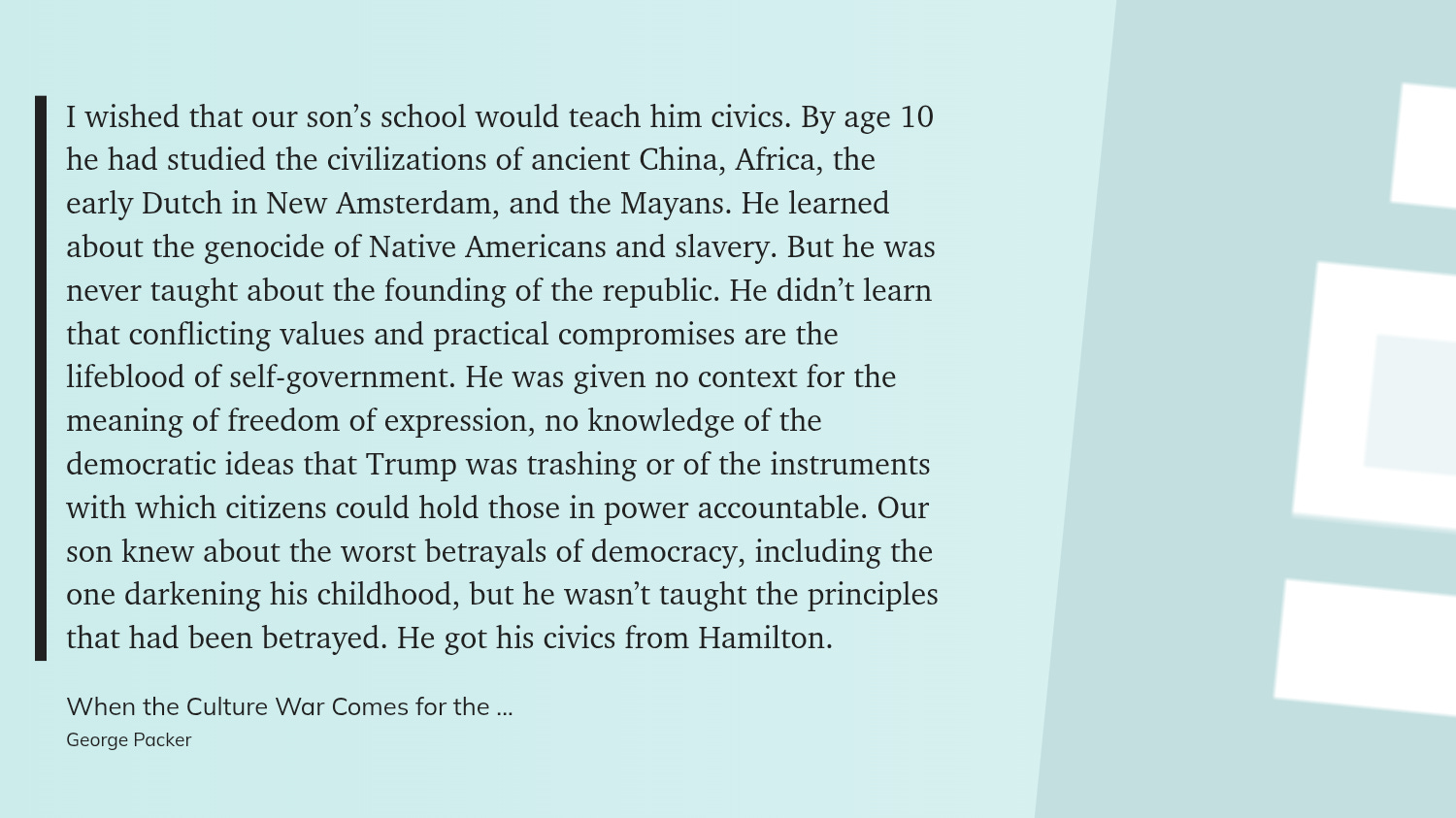
If George Packer’s son graduates from Wesleyan, there will still be no guarantee that he’d know anything about “the principles that had been betrayed.”